Sam Berger · 4 October 2026
How Platform Architecture Choices Shape Community Loyalty in Niche Digital Spaces During Growth Phases
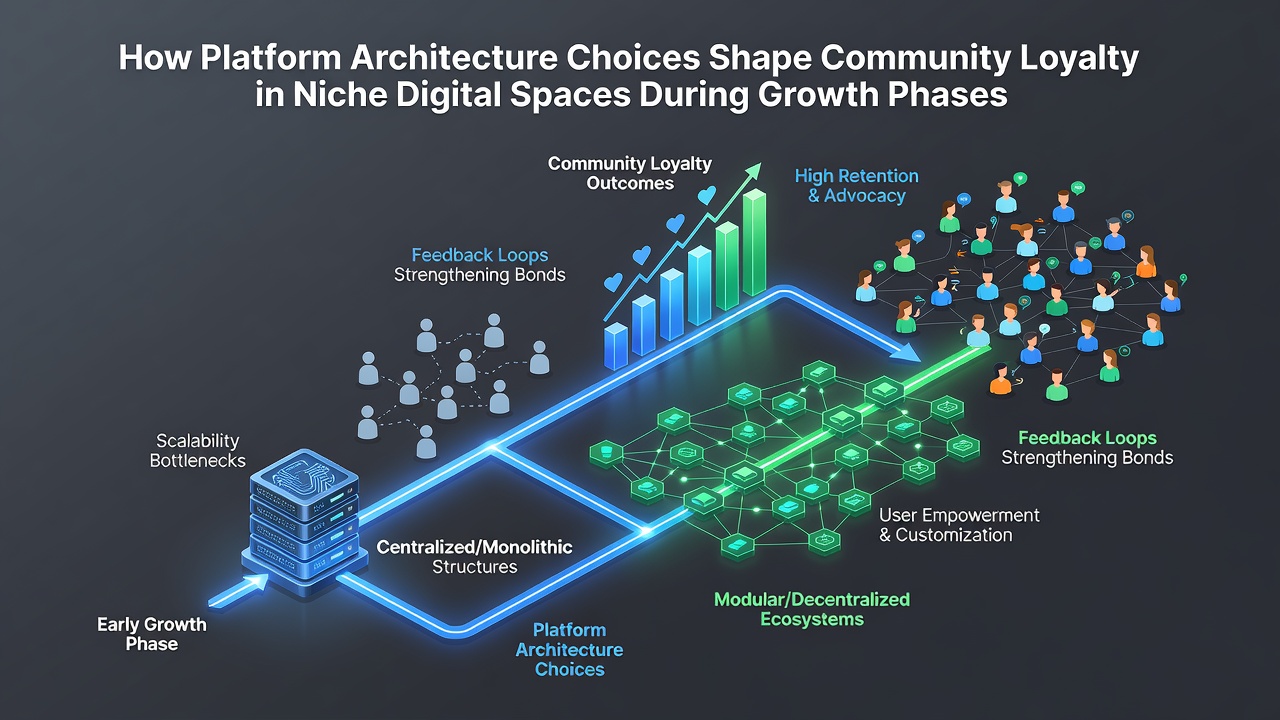
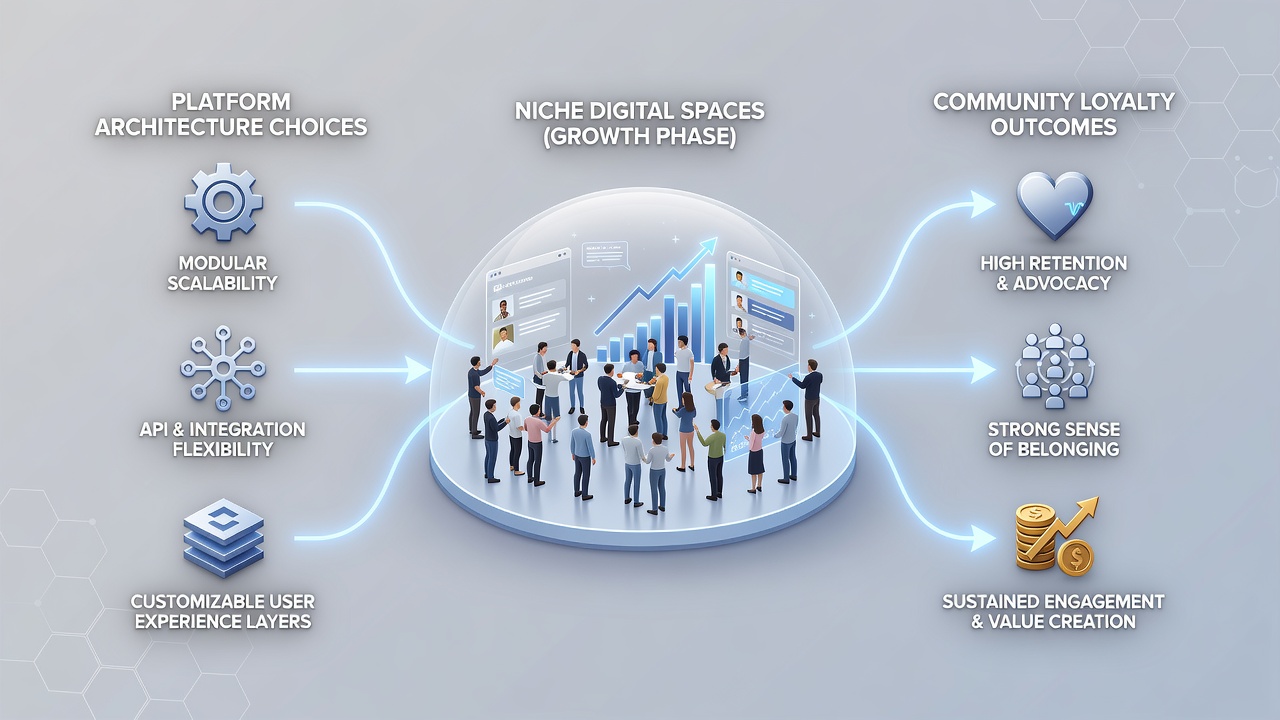
Platform architecture decisions directly influence how users interact and remain committed within specialized online environments as membership expands. Data from multiple industry analyses show that choices involving database structures, API accessibility, and moderation frameworks correlate with measurable differences in retention metrics during scaling periods. Researchers tracking digital communities note that these technical foundations often determine whether groups maintain cohesion or experience fragmentation when participant numbers rise sharply.
Database Design and User Data Portability
Centralized versus distributed database models present distinct outcomes for loyalty formation. Studies conducted by teams at the University of Melbourne indicate that platforms employing user-controlled data export functions experience lower churn rates when communities grow beyond initial thresholds. This pattern emerges because members retain ownership over their contributions, which encourages continued participation even as new users join. In contrast, systems that lock content within proprietary silos show higher exit rates once scaling introduces interface changes or policy shifts.
API Openness and Third-Party Integration
Open API frameworks allow external tools to connect seamlessly with core platform functions. Reports compiled by the Canadian Internet Registration Authority highlight cases where niche forums adopted extensible APIs during 2024 and 2025, resulting in sustained activity levels as membership doubled. These integrations enable custom bots, analytics dashboards, and notification systems that users value during rapid expansion phases. Platforms restricting API access tend to see engagement drop as third-party developers shift focus elsewhere, leaving core communities without supplementary features that support daily interaction.
Moderation Infrastructure During Expansion
Automated and human moderation layers scale differently depending on their architectural integration. Evidence from longitudinal observations at the European Digital Media Observatory reveals that systems combining rule-based filters with transparent appeal mechanisms retain active participants more effectively when user volume increases. This occurs because clear escalation paths reduce perceptions of arbitrary enforcement, a factor that becomes critical once diverse viewpoints enter growing spaces. Architectures relying solely on centralized review teams often encounter bottlenecks that delay responses and erode trust.
Observers tracking developments through October 2026 note that several hobby-focused platforms adjusted their backend moderation queues to handle increased report volumes while preserving community input channels. Those adjustments coincided with stabilized participation metrics, whereas platforms that delayed such updates recorded measurable declines in returning users.
Scalability Mechanisms and Perceived Stability
Load balancing and caching strategies affect how members experience platform responsiveness during traffic spikes. Research published by the Australian Communications and Media Authority demonstrates that architectures incorporating edge caching and regional server distribution maintain consistent performance, which correlates with continued loyalty in specialized interest groups. Users in these environments report fewer disruptions when events draw temporary surges, allowing discussions and shared activities to continue uninterrupted. Systems without distributed resources frequently encounter latency issues that prompt temporary or permanent departures.
Case Examples from Niche Environments
Take one independent photography forum that restructured its content delivery network ahead of a membership surge in early 2025. Participation logs showed that daily active users remained steady six months later, unlike comparable sites that encountered slowdowns during the same period. Another instance involves a language learning server network that introduced modular plugin support, enabling community-created vocabulary tools that integrated directly with core profiles. Retention figures released by the network operators indicated higher return rates among long-term members compared with platforms maintaining closed extension policies.
Conclusion
Architecture selections concerning data handling, integration capabilities, moderation workflows, and resource distribution produce observable effects on loyalty within niche digital spaces as they expand. Quantitative records from academic and regulatory sources across regions confirm that platforms prioritizing portability, openness, transparency, and performance consistency encounter fewer disruptions to community continuity. These technical decisions therefore function as foundational elements that shape participation patterns throughout growth phases.