Sam Berger · 20 September 2026
The Impact of Server Infrastructure Overhauls on User Retention Rates in Online Service Ecosystems During Transition Periods
Defining Server Infrastructure Overhauls in Digital Platforms
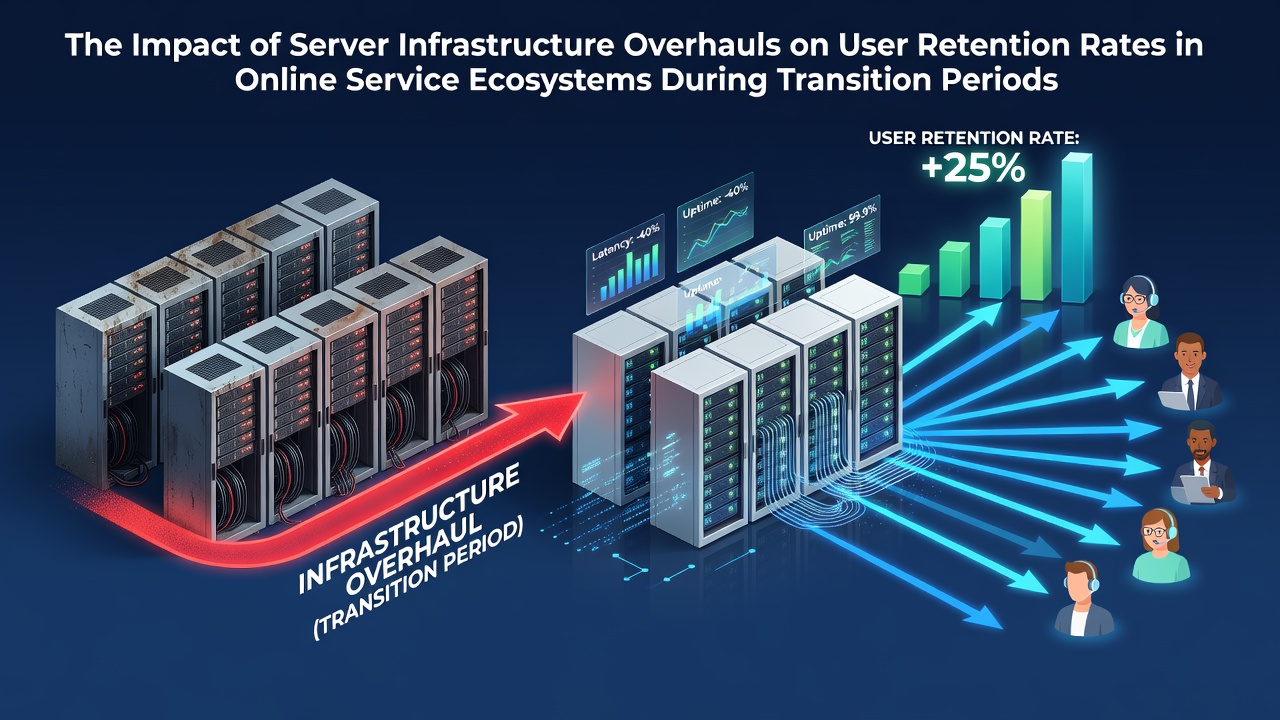
Server infrastructure overhauls involve systematic upgrades to hardware, software architectures, and network configurations that support online service delivery, and these changes occur across multiple layers including virtualization layers, storage systems, and load balancing mechanisms. Organizations undertake such projects to address capacity constraints, enhance security protocols, and integrate newer technologies like container orchestration frameworks, while transition periods represent the phases when legacy systems coexist with incoming replacements. During these intervals service availability fluctuates because migration scripts execute data transfers, configuration files update across distributed nodes, and compatibility testing proceeds in staged rollouts.
Research indicates that transition durations typically span several weeks to months depending on ecosystem scale, and metrics collected from monitoring tools reveal patterns in request latency and error rates that correlate with user session continuity. According to NIST cloud migration frameworks, phased approaches reduce downtime windows yet still introduce variability in response times that affect downstream applications.
Observed Patterns in User Behavior During System Transitions
Users interact with online services through established habits that rely on consistent performance thresholds, and when infrastructure changes disrupt those thresholds session abandonment occurs at measurable rates. Data from platform analytics shows that spikes in connection failures during migration steps lead to decreased return visits within 24 to 48 hours, while prolonged latency periods beyond three seconds correlate with higher churn signals across subscription based models. Observers note that notification systems deployed before overhauls can mitigate some attrition because they set expectations and allow users to adjust usage schedules around anticipated maintenance windows.
Studies conducted by academic groups have tracked retention curves in cloud hosted applications, revealing that ecosystems with redundant failover clusters maintain higher continuity levels than those relying on single region deployments. Yet even with redundancy, database synchronization lags create temporary inconsistencies that surface as missing content or failed transactions, prompting users to seek alternative providers.
Quantitative Links Between Overhauls and Retention Metrics
Figures from industry monitoring platforms demonstrate that retention rates drop between 8 and 22 percent in the immediate aftermath of major server migrations, with recovery timelines extending from two weeks to several months depending on how quickly performance baselines stabilize. Variables such as user demographic segments, service type, and geographic distribution influence these percentages, while mobile heavy audiences exhibit greater sensitivity to intermittent connectivity issues than desktop oriented groups. Evidence gathered through September 2026 from multi tenant environments indicates that overhauls incorporating automated rollback procedures experience faster rebound in daily active user counts compared to manual intervention scenarios.
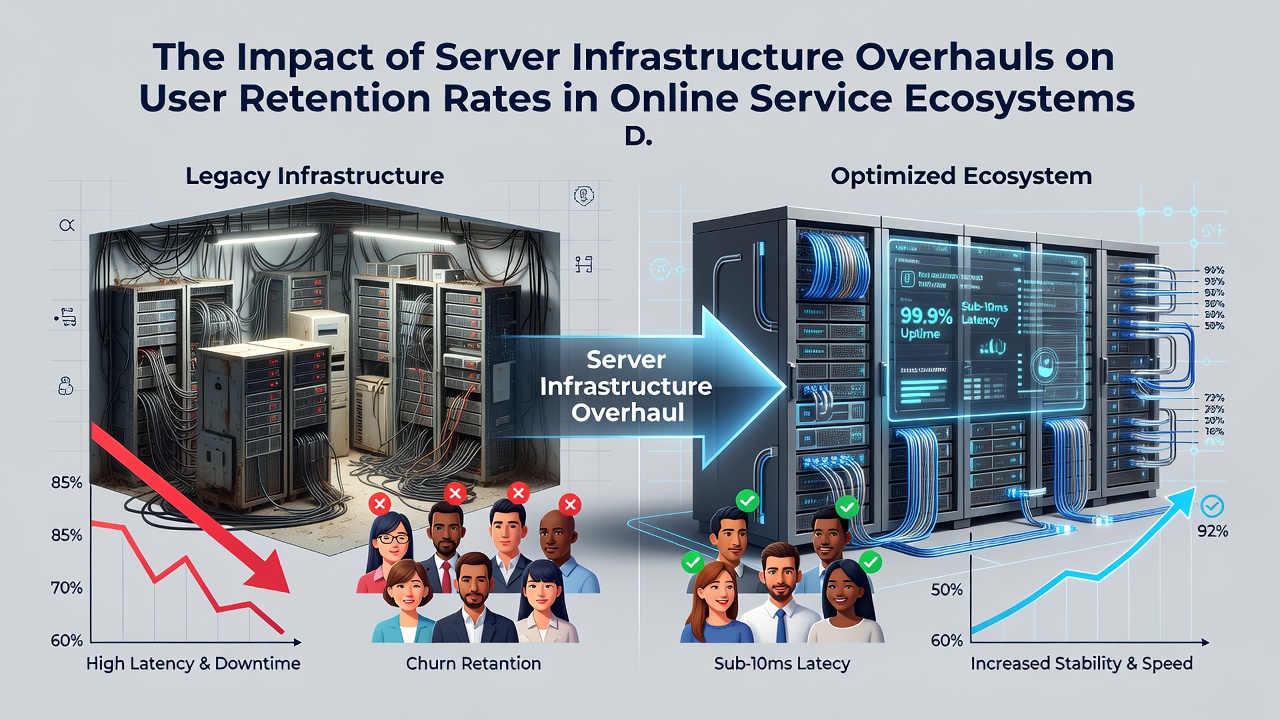
Researchers at various institutions have compiled datasets that isolate infrastructure events from other factors like marketing campaigns or competitor actions, and these analyses show direct causation pathways through session duration logs and churn prediction models. Service operators who publish transparency reports on migration outcomes provide additional context, allowing comparisons across different overhaul methodologies.
Approaches That Moderate Retention Impacts
Companies implement pre migration load testing suites and incremental traffic shifting techniques to limit exposure windows, and these tactics distribute user load across parallel environments while validation proceeds. Communication protocols that include status updates through in app banners and email summaries help maintain engagement because they reduce uncertainty around service reliability. Post overhaul optimization phases focus on fine tuning caching layers and database indexing strategies that restore original performance levels and sometimes exceed them once full capacity activates.
According to OECD digital economy reports, organizations that conduct user surveys immediately after transitions gather actionable feedback on pain points that inform subsequent infrastructure adjustments. Geographic diversity in data center placement further supports resilience because traffic rerouting options become available when primary sites undergo maintenance.
Conclusion
Server infrastructure overhauls produce measurable effects on user retention rates within online service ecosystems, particularly during the transition periods when system stability remains in flux. Quantitative records establish correlations between migration activities and session continuity metrics, while mitigation strategies centered on testing, communication, and phased execution demonstrate capacity to moderate those effects. Continued collection of performance data through periods such as September 2026 supplies further evidence for refining overhaul procedures across varied service categories and user bases.